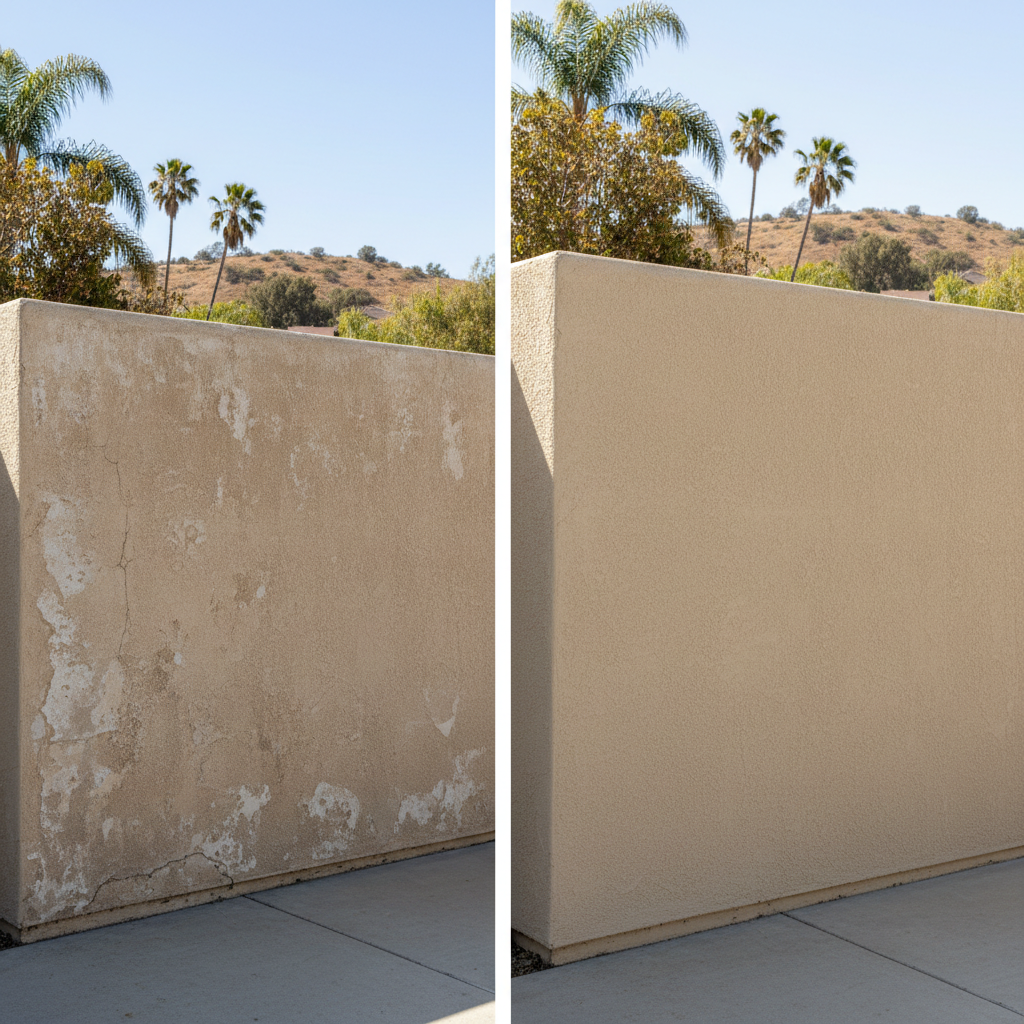
Alright, so your stucco's looking a little tired. Maybe it's got some hairline cracks, or you just want a fresh new look for your Walnut home. You're probably thinking about redashing, which is basically putting a new finish coat on. But here's the thing: you've got two main ways to go about it – a full tear-off and re-stucco, or an overlay. I see homeowners wrestling with this decision all the time, so let's clear it up.
The Full Tear-Off: Starting Fresh
This is exactly what it sounds like. We come in and strip everything right down to the studs. All the old stucco, the lath, the paper – it all comes off. Then we build it back up from scratch: new paper, new lath, new scratch coat, brown coat, and finally, your new finish coat. It's like giving your house a brand new skin, you know?
Pros of a Full Tear-Off:
- Durability and Longevity: When you start fresh, you're getting a brand new system. This means it's built to last, often for decades, especially with the modern materials and building codes we follow. You won't have to worry about old problems lurking underneath.
- Addressing Hidden Issues: This is a big one, especially in older homes around areas like the Snow Creek neighborhood. We often find dry rot, termite damage, or framing issues that were completely hidden by the old stucco. A tear-off lets us fix those problems properly before they get worse. You can't fix what you can't see, right?
- Improved Water Management: We can put in modern weep screeds and flashing details. These are designed to handle our occasional heavy rains, stopping water from getting in – which might have been a problem with older installations. This is super important for avoiding future headaches.
- Complete Design Freedom: Want to change the texture completely? Add architectural details? A tear-off gives you a blank canvas.
Cons of a Full Tear-Off:
- Cost: No surprise here, it's the most expensive option. You're paying for demolition, disposal, and a whole new installation.
- Time and Disruption: It takes longer, and it's a messier process. Your home will be a construction zone for a bit.
- Permitting: A full tear-off usually needs more extensive permitting than an overlay. That adds to both the timeline and the cost.
The Overlay (or Resurfacing): A New Face for Your Home
An overlay means we apply a new layer of stucco directly over your existing, structurally sound stucco. We'll clean the old surface, make any minor repairs, put on a bonding agent, and then lay down a new finish coat. Think of it as a really good facelift for your house.
Pros of an Overlay:
- Cost-Effective: This is usually the biggest draw. It's much cheaper than a full tear-off because you save on demolition, disposal, and all those underlying layers.
- Faster Project Time: Since we're not tearing everything off, the job gets done quicker. Less disruption for you and your family.
- Less Mess: While any stucco work creates some dust, an overlay is generally a lot cleaner than a tear-off.
- Good for Cosmetic Updates: If your existing stucco is in good shape structurally but just looks dated or has minor surface imperfections, an overlay can give it a beautiful, fresh appearance.
Cons of an Overlay:
- Limited Problem Solving: This is the main drawback. If you have underlying issues like water damage, dry rot, or serious structural cracks, an overlay won't fix them. It'll just cover them up, and those problems will likely resurface later, potentially worse than before.
- Adds Thickness: You're adding another layer of material. This can sometimes create issues around windows, doors, and trim if it's not planned carefully.
- Durability Concerns: While a good overlay can last, it's generally not as long-lasting as a brand new system. The longevity depends heavily on the condition of the existing stucco underneath. If the old stucco isn't properly prepared or has hidden issues, the new layer might not bond as well or could crack prematurely.
- Less Design Flexibility: You're generally limited to applying a new finish coat over the existing texture. Significant texture changes or architectural additions are harder to achieve.
My Recommendation for Walnut Homeowners
Look, I'm not going to tell you one is always better than the other. It really depends on the condition of your existing stucco and what you're trying to achieve. However, for most homes in Walnut, especially those built before the 90s, I lean towards a full tear-off if your budget allows.
Why? Because our climate here, with those hot, dry summers and then the occasional heavy winter rains, can be tough on stucco. Older installations often weren't built with the same water management principles we use today. I've seen too many cases where an overlay was done, only for the homeowner to discover significant dry rot or water damage a few years later that should have been addressed. It ends up costing more in the long run, doesn't it?
If your stucco is relatively new (say, less than 20 years old) and has only minor cosmetic issues with no signs of water intrusion or significant cracking, then an overlay can be a perfectly good, cost-effective solution to refresh its look. But if there's any doubt, or if your home is older, a tear-off gives you that confidence that everything's solid underneath. It's an investment, sure, but it's an investment in the long-term health and value of your home.
The best thing to do is have someone like us at Oasis Stucco Co come out and take a look. We'll give you an honest assessment of your stucco's condition and help you figure out which approach makes the most sense for your specific situation and budget.